Anti-Dynasty #23: 1966-77 Philadelphia Eagles
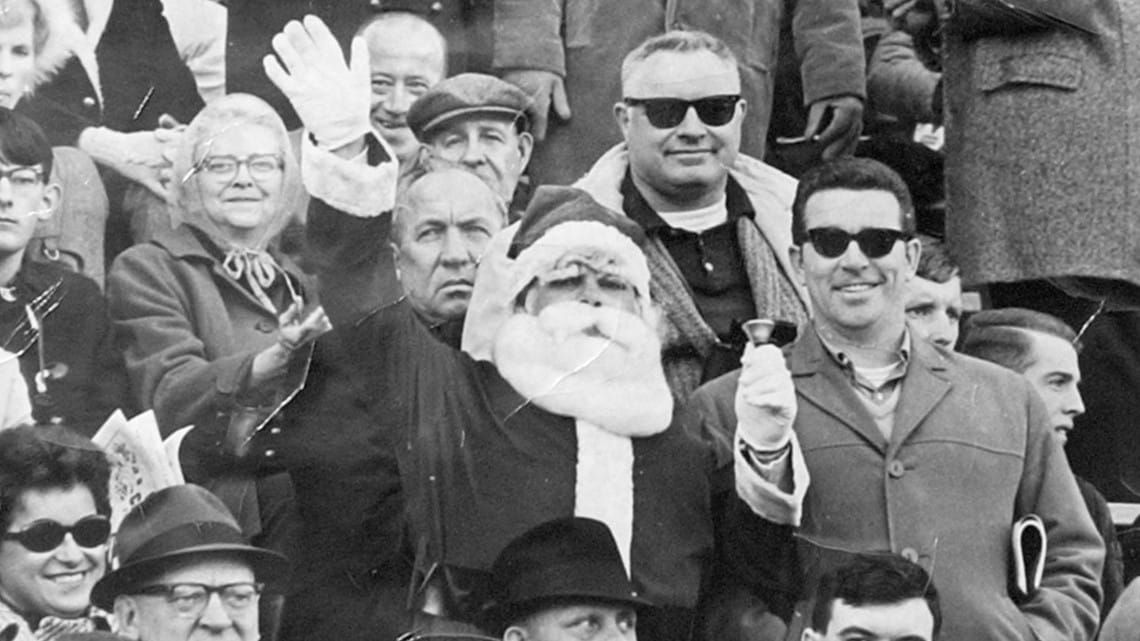
Bad enough to justify booing Santa Claus. Almost, at any rate.

Peak Anti-Dynasty Points: 59
Record: 48-100-6 (.331)
Average DVOA: -15.8%
Bottom-Five DVOA: -25.3%
One last-place finish in the NFL; Two last-place finishes in the NFC; Six last-place finishes in the NFL Capital/NFC East
Head Coaches: Joe Kuharich, Jerry Williams, Ed Khayat, Mike McCormack, Dick Vermiel
Key Players: QB Norm Snead, RB Tom Sullivan, FB Tom Woodeshick, WR Harold Jackson, WR Ben Hawkins, TE Charle Young, TE Harold Carmichael, G Wade Key, DE Mel Tom, LB Bill Bergey, CB Al Nelson, S Bill Bradley, S Nate Ramsey, S Randy Logan
Z-Score: 0.25
Veterans Stadium! A triumph of modern engineering, the jewel of the NFL, and the home of the greatest team in the world, the 1970s Philadelphia Eagles!
Yeah, both of those statements collapsed before getting very far. The Eagles moved into the Vet in 1971, nicely coinciding with this entry. Built at the height of multi-purpose cookie-cutter stadium mania, Veteran's Stadium proved inadequate for any purpose. Lineman Doug Brzezinski described the Vet as smelling of "diesel fuel, spilled beer, and urine." This is fitting because the Eagles, too, stunk.
But even before we get to the Vet, Eagles fans will be Eagles fans—1968 is the year they famously shelled Santa Claus with snowballs, spawning a stereotype that lives to this day. It's understandable why Philly fans were upset. The Joe Kuharich era had been a big step down from the team that started the decade by winning the NFL championship. He organized the trade of Sonny Jurgensen for Norm Snead, and the players left behind never seemed to live up to their potential. Kuharch's Eagles were never the worst in the league, which was almost worse—that means Philly never had a top draft pick. By 1968, fans were chanting "Joe Must Go" and had no time to celebrate with freaking Santa Claus. They got their wish in 1969—the team was sold, and new owner Leonard Tose's first order of business was to fire Kuharch and bring in Jerry Williams to coach the team. Santa Claus out. Unfortunately, Krampus replaced him.
Tose was a fan, arguably even a fanboy. The trucking multimillionaire had been part of the Happy Hundred fan-owners of the team in the 1950s, but now he was in full control, with a swagger and a style that was very cool and happening and with it … and entirely ineffective at actually running a football team. Norm Snead may have been no Jurgensen, but he was an occasional Pro Bowl quarterback—Tose traded him away for peanuts, leading Philly to flip back and forth between CFL veteran Pete Liske and undrafted Rick Arrington. For a while, the defense was able to keep the team competitive, but the bottom fell out in 1972.
The Eagles had had double-digit-negative DVOAs since 1966, but 1972 saw them hit an estimated total of -38.3%, the worst mark in franchise history by a significant margin. It was their third season with three or fewer wins since 1968, but 1972 hit differently—the worst offense in the league and second-worst defense. Even by 1972 standards, 10 touchdown passes is pathetic, and coupling that to 20 interceptions is that much worse. Neither Liske, Arrington, nor John Reaves was an NFL-caliber player—consider they put up those numbers with Harold Jackson and Harold Carmichael at receiver! Maybe they could have survived that with a ground game, but Po James and company put up just 3.5 yards per carry. Maybe even that could have been survivable, but Philly was outscored by 207 points, which has stood as the franchise record even through the 16-game era.
Everyone was fired after the year, and justifiability so. The arrival of quarterback Roman Gabriel in 1973 and all-pro linebacker Bill Bergery in 1974 brought the Eagles back into the welcoming arms of mediocrity, but it wasn't until Dick Vermeil arrived towards the end of the decade that the Eagles fully recovered, ending a decade without a winning record. A just and fair reward for booing Santa, if you ask me.