Anti-Dynasty #27: 1950-59 Chicago Cardinals
The Cardinals make their first appearance on our list -- and certainly not their last.

Peak Anti-Dynasty Points: 62
Record: 33-84-3 (.288)
Average DVOA: -12.7%
Bottom-Five DVOA: -18.3%
Four last-place finishes in the NFL; Seven last-place finishes in the NFL American/Eastern
Head Coaches: Curly Lambeau, Cecil Isbell, Phil Handler, Joe Kuharich, Joe Stydahar, Ray Richards, Pop Ivy
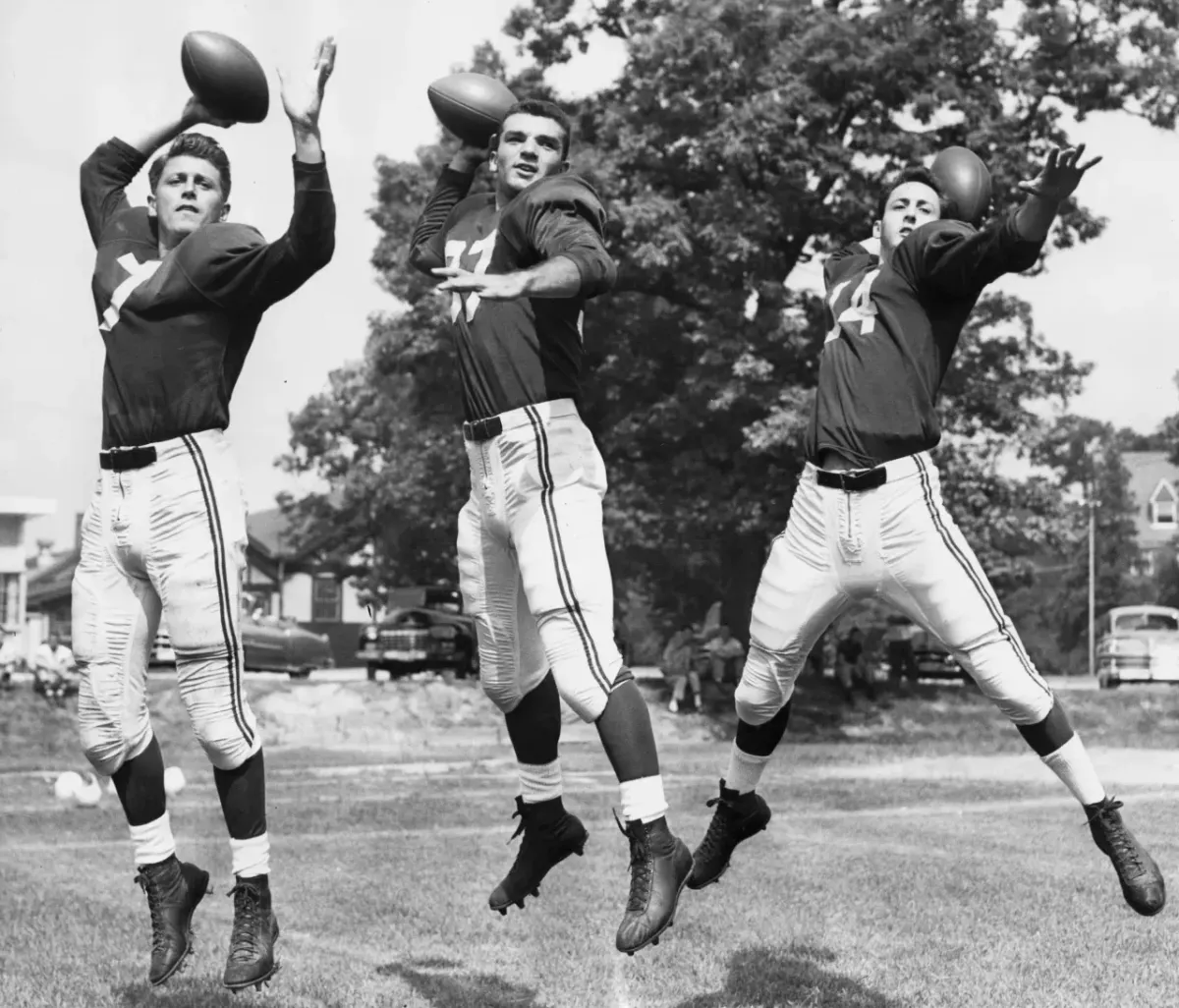
Key Players: QB Lamar McHan, B Charley Trippi, RB Ollie Matson, FB Johnny Olszewski, E Don Stonesifer, E Gern Nagler, T Bill Fischer, T Jack Jennings, C Jack Simmons, DE Leo Sugar, LB Leo Sanford, DB Night Train Lane, DB Lindon Crow
Z-Score: -0.36
So. It has come to this.
The Cardinals are one of the two teams remaining from the NFL's inaugural season—106 years of professional football, and several decades of semi-pro ball before it. They were also one of the few teams to have no entries in the dynasty rankings, a nearly inconceivable feat for a team with this much history. There have been brief bursts of success—the stolen 1925 championship, back-to-back NFL title game appearances in 1947 and 1948, a brief Don Coryell run in St. Louis in the 1970s, the Kurt Warner years, the Carson Palmer years—but they have been brief moments of optimism in an ocean of despair. The Cardinals franchise has 52 seasons on the Anti-Dynasty list, over half their time in the league. Second place is a five-way tie at 28 seasons between the Buccaneers, Rams, Jets, Browns and Saints. The Cardinals are the saddest franchise in league history, and it's not even particularly close.
The post-war 1940s Cardinals were the closest the franchise has ever gotten to a dynasty. Charles Bidwill, upset that the AAFC's Chicago Rockets were threatening to make the Cardinals the third-most popular team in the city, went on a massive spending spree and created the Million Dollar Backfield—quintuple threat Charley Trippi, 1948 MVP Pat Harder, college Hall of Famers Paul Christman and Marshall Goldberg, and bulldozing back Elmer Angsman. That set won the Cardinals their only undisputed world championship, but only Trippi remained by 1952.
That left Trippi and Ollie Matson as the only significant threats the Cardinals had on offense, and the offensive play calling quickly devolved into "get the ball to Matson and hope," especially after injury ended Trippi's career in 1955. While the team's rushing numbers were OK, if below average, their passing numbers were historically terrible. From 1952 to 1955, they averaged a passing DVOA of -29.7%. Only 19 teams in the actual DVOA era have ever put up a single season that bad, much less a run for half a decade. These Cardinals have three of the worst 100 passing seasons since 1950 and five of the worst 200. There is a (sadly apocryphal) story that they used a first-round pick on a quarterback based on his photo in a draft guide; when he arrived at camp, it turned out he could not throw the ball 15 yards. In 1950, quarterback Jim Hardy threw eight interceptions in a single game, still the NFL record. Their first-round pick in 1954 was quarterback Lamar McHan; he was suspended and fined for insubordination and wasn't much more use when he actually saw the field. Defenses could key in on Matson, making it all the more amazing that he retired with the second-most all-purpose yards in history at that point in time—without him, the Cardinals might never have scored at all.
The defenses weren't much better, despite boasting Night Train Lane. They're most notable for being the first team to ever give up 30 or more points in five consecutive games, a feat which has still happened only 37 times in NFL history despite modern offensive numbers. The respective nadirs of the offense and defense never lined up for the 1950s Cardinals, so they never had an estimated DVOA below -25.0% and aren't quite the worst team of the 1950s, but only just.
They gained some small solace by having a winning record against the cross-town Bears this decade, but they only beat the Bears on the field. Off the field, while the Bears were drawing full houses, Comiskey Park attendance dwindled terribly close to 10,000. In addition, the rise of television meant that the Bears and Cardinals were splitting the Chicago market, a status quo that helped no one. Both the Bears and Cardinals were offered $50,000 from the league to move, but both declined—the Cardinals argued that they had been there longer and should get to stay; the Bears argued they were better and had better attendance.
The Bidwills held fast through the decade until the fledgling AFL showed an interest in the St. Louis market. Suddenly, there was money to spare—George Halas offered $500,000 over 10 years and a St. Louis business owner offered $300,000 more. That money talked, and in 1960, the St. Louis Cardinals were born, ending the team's 40 years of NFL football and 62 years of existence in the Windy City.