Anti-Dynasty #6: 1960-72 Denver Broncos
The worst team in AFL history.

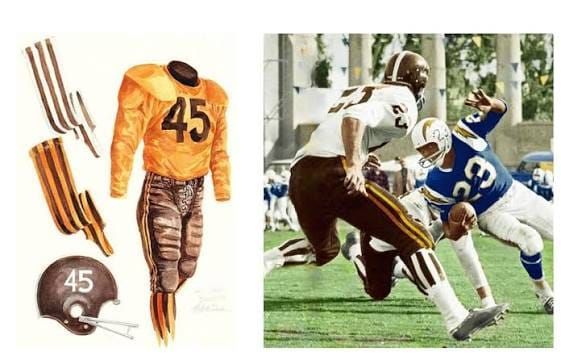
Peak Anti-Dynasty Points: 80
Record: 53-123-6 (.308)
Average DVOA: -18.1%
Bottom-Five DVOA: -37.7%
Five last-place finishes in the AFL, Eight last-place finishes in the AFC/AFC West
Head Coaches: Frank Filchock, Jack Faulkner, Mac Speedie, Ray Malavasi, Lou Saban, Jerry Smith, John Ralston
Key Players: QB Frank Tripucka, RB Floyd Little, RB Gene Mingo, RB Donnie Stone, E Lionel Taylor, WR Al Denson, FL Bob Scarpitto, T Eldon Danenhauer, T Mike Current, C Jerry Sturm, C Larry Kaminski, DE Tombstone Jackson, DT Dave Costa, DT Bud McFadin, LB Jim Fraser, CB Willie Brown, S Goose Gonsoulin
Z-Score: 9.17
It's generally accepted that the quality of play in the AFL was below the quality in the NFL, especially in the early years of the league. It's difficult to ascertain just how far below they were, or when they eventually gained parity—even in 1970, the first year of the merger, the old AFL teams were on average slightly worse than the old NFL teams. Estimated DVOA for AFL teams is simply based on their performance against other AFL teams, with that set as their own league average. What that means is there's a chance that the 1967 Denver Broncos, with an estimated DVOA of -46.4%, might have been the worst professional team in the modern era.
There's no doubt that the Broncos were the worst team in the AFL. Of the eight original teams, six won AFL championships, and Boston at least made an AFL title game. Denver, on the other hand, was the only original team to fail to win 60 games in the league. Or 50. Or 40, while we're at it. They were the only team to fail to have a winning season at any point in the decade. While they may not be tops on our list, they can rest assured that they were the worst franchise in the second-most important football league in history.
The early Broncos were hard to watch, and for two years, I mean that very literally. In part to save on money, the Broncos' first uniforms were leftovers from the defunct Copper Bowl college all-star game, and are quite possibly the worst of all time—yellow on brown, with vertically striped socks to complete the ensemble. When they finally had enough money to switch to orange uniforms in 1962, they famously burned every uniform they could find in a massive bonfire (lots of things going up in flames here in the top 10).
But if they were just dressed ugly, they wouldn't be on the list. Frank Tripucka was retired and came in as an assistant coach on the original 1960 team, but all the passers Denver could find were bad enough that Tripucka strapped on a helmet and ended up as the starter for three seasons—his 34 interceptions in 1960 and the 68 turnovers he, George Herring, and the rest of the 1961 Broncos managed (only one other Denver team has ever even topped 60) both remain franchise records to this day. Tripucka to Lionel Taylor was a deadly passing combination, but you can't win football games with just one explosive player, and the Broncos were otherwise just utterly devoid of talent.
Nowadays, a bad team can count on the draft to quickly bolster their ranks, but the Broncos didn't have that luxury. This was still the era when the NFL and AFL were competing to sign draft picks, and no one wanted to sign with the Broncos; playing for a team that was both new and bad was not an enticing proposition. Now, playing for a team that was new, bad, and paying you a ton of money is enticing, but the Broncos simply didn't have any cash—why do you think they were using second-hand uniforms? Original owner Bob Howsam had expanded his minor-league baseball stadium, expecting a third baseball league to start in 1961. When that fell through, he had a 32,000-seat stadium and nothing to put in it, and the Broncos were an emergency Plan B. So the Broncos mostly avoided drafting superstar college athletes because they couldn't afford to sign them, and even when they made great picks—Merlin Olsen! Kermit Alexander!—those players usually opted to go to the NFL instead. The Broncos drafted 30 players in 1961; only two made the roster. They drafted 34 more in 1962; only two made the roster.
And so the hits kept coming. At least Tripucka was getting the ball down the field; when he left in 1963, so did the offense. Also in 1963, the Denver defense allowed 40 passing touchdowns, which stood as an NFL record until 2015, so it's not like they were holding their own in any defensive slugfests. They could have fixed that in 1965, but they opted to trade out of the first pick instead of drafting Joe Namath. I mean, they did draft Dick Butkus instead, but Namath was fine coming to the AFL, while Butkus was not and did not. In 1966, they became the last team to ever go an entire game with zero first downs in a 45-7 trouncing by Houston—going 2-for-20 passing for negative-1 yard will do that for you. It was a nightmare, wherever you look.
In 1967, the Broncos drafted Floyd Little, which saved the team in two ways. Firstly, on the field, Little immediately became a team captain and arguably the best running back in football, finally making it into the Hall of Fame in the class of 2009. But almost more importantly, Little got Denver fans interested in the Broncos. He literally went door to door, both locally in Denver and as far afield as Wyoming and Nebraska, asking fans for money to keep the Broncos in Denver—because, did I not mention? It's a freaking miracle the Broncos stayed in Denver.
Howsom, the original owner, got out after the 1960 season and very nearly sold the franchise to a San Antonio syndicate. In 1964, very credible rumors published in the Chicago Sun-Times had the Broncos moving to Chicago and playing in Comiskey Park, a replacement for the departed Cardinals. In 1965, a group of minority owners attempted to sell the team to an interested group from Atlanta. In 1968, after the merger with the NFL was announced, the Broncos were required to move into a 50,000-seat stadium, and Birmingham offered them a home. Little was the first Denver first-round pick to sign with the team, and it may have only happened because 1967 was the first common draft between the two leagues. Had the common draft happened a year later, and Little ended up in Detroit, or had Little not cared about keeping the team in Denver, we could be talking about the Chicago or Birmingham Broncos today.
So why aren't the Broncos No. 1? Part of it is artificial inflation of their AFL DVOA; if you assume that AFL teams were 10 points worse than NFL teams, the Broncos would jump to second place. That would get them most of the way there, but the run just doesn't last long enough to get them higher. Lou Saban's teams became at least respectable losing squads, John Ralston got them to competitiveness, and they were in the Super Bowl by 1977. You have to be pretty bad to rank higher than this without multiple decades of failure.