Best Players Not in the Hall of Fame: AFC
With the 2026 Hall of Fame game tonight, we look at the best players from each AFC team still waiting to get into Canton.

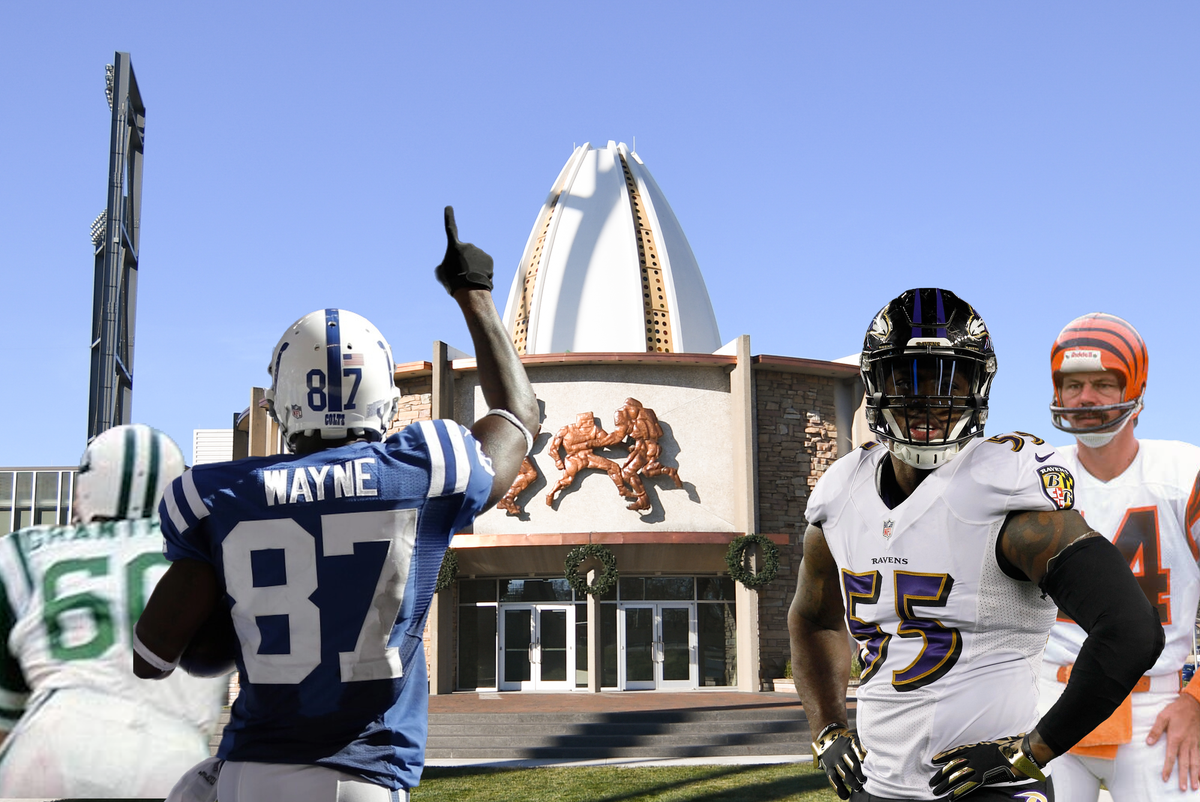
The 2026 Hall of Fame Game – tonight! Thrill to Carson Beck and Kenny Pickett action before falling asleep on your couch!
To celebrate the annual induction ceremony, we're looking at the best players yet to get the call to Canton. Yesterday, we looked at each NFC team's best player not yet in the Hall of Fame, and today, we pivot to the AFC. Funny how that works.
The NFC's bench is, admittedly, deeper than the AFC's. That's partially just due to NFC teams being older on average, but that's not all of it – I'm raiding plenty of AFL-only legends to round out my AFC picks today. We may still be seeing some of the after-effects of the NFC being the dominant conference from 1981-1996; while the no-doubt Hall of Famers are already in, there may just be depth in the NFC fighting its way to the top than there is in the AFC. Plus, not all of the Patriots' dynasty is eligible yet, and they operated fully in the salary cap era, rotating out their supporting cast faster than great teams in the past did. Maybe that just innately creates fewer worthy candidates? Or maybe I'm just NFC biased. You can be the judge of that.
Two quick reminders before we begin. I'm looking at players who have had the opportunity to make the Hall, but have not succeeded yet. Aaron Rodgers is the best Packer not in the Hall, but he's still active; he's not on this list. Tom Brady is the best Patriot not in the hall, but he's not eligible for two more years, so he's not on this list. Ben Roethlisberger is the best Steeler not in the Hall, but 2027 will be the first time he is eligible, so the committee hasn't had a chance to weigh in on him yet. We're looking for snubs, as it were, not players who haven't been talked about yet.
Secondly, "best player not in the Hall" does not necessarily mean "deserves to be in the Hall". The Houston Texans have only existed since 2002; they do not have a deep bench of qualified candidates banging on the doors. By definition, this list is going to mostly consist of borderline candidates, and some players won't even reach that mark. That's OK. Everyone's gotta have a best player not yet in, even if they never will get in.
Good? Great. Here are the players still waiting in the AFC.
AFC North
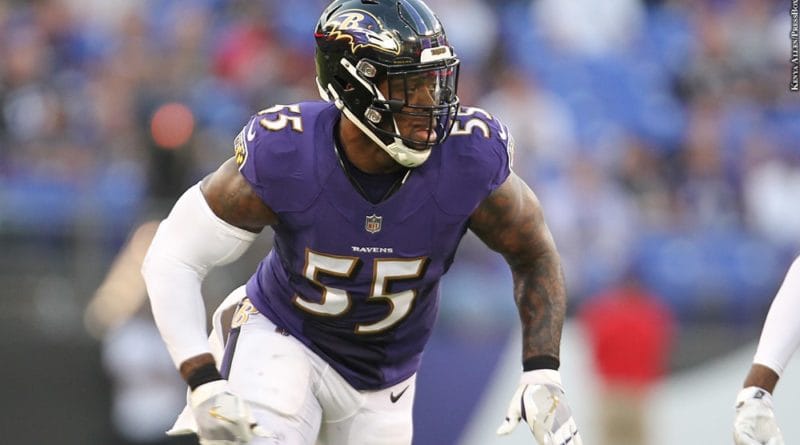
Baltimore Ravens: LB Terrell Suggs
Two-time finalist, most recently in 2026
Of everyone on this list, Suggs is the most likely to get a gold jacket in the class of 2027. He missed the cut when they went from seven to five, which means he’s an automatic finalist next year. Every single eligible person with more than his 139 career sacks is already in the Hall, he’s got two championship rings, he’s won both Defensive Rookie of the Year and Defensive Player of the Year – it’s a very robust resume. He is the NFL’s all-time leader in tackles for a loss, at least since the NFL started officially tracking that statistic. I could pick nits, and those nits are what kept him from being a first-ballot guy – he was part of a great defense led by Ray Lewis and Ed Reed, rather than the obvious force behind it; he was only a first-team All Pro once so you could make some compiler arguments; he didn’t make either the All-2000s or All-2010s decade teams, though he presumably would have made the All 2005-2015 team if that had existed. I think those are fine points to bring up if you’re trying to compare him to Derrick Brooks or Lawrence Taylor or someone. But that’s not the bar to get into the Hall! We might get Suggs and Marshall Yanda in the next year or two, and whichever doesn’t get in will be in this slot here next year.
Cincinnati Bengals: QB Ken Anderson
Three-time finalist, most recently in 2026
Willie Anderson is the Bengal most likely to get in next; an automatic finalist thanks to making the top seven last year. But I do think Ken Anderson was better, even if analytics and advanced stats can overstate just how good Ken actually was.
Anderson led the league in passer rating in four years; everyone else who has done that is in the Hall. That, of course, is partially due to the fact that Anderson was working with offenses that were forming the blueprint for the West Coast system; a lot of short, rhythm-based throws that other quarterbacks weren’t attempting at the time. Anderson ran that system really well, but that’s the kind of accuracy passer rating really loves, so Bill Walsh was kind of teaching to the test, here. Anderson also had two distinct isolated peaks, with a gap in the middle where he barely looked like a starter, much less a Hall of Famer. Then again, so did Kurt Warner – but Warner has the ring, Anderson doesn’t. If the Bengals beat the 49ers in Super Bowl XVI, so Anderson gets a season with an MVP and a championship in one go, I think he’s in.
For what it’s worth, while we don’t have DYAR for Anderson’s entire career, he did finish second in passing DVOA and DYAR in both 1981 and 1982, and was in the top 10 in 1977, 1979, 1983 and 1984 as well. He was a very good quarterback with a superstar peak, and the lack of rings as much as anything else does him in. He got a look last year from the Senior committee, his first hearing since 1998, but they chose to pass.
Cleveland Browns: T Dick Schafrath
Zero-time finalist, missed the cut to 9 last year
Hey, someone had to pave the way for Jim Brown, Leroy Kelly and Bobby Mitchell. Schafrath never had a losing season as he helped pave the way for some of the best rushing attacks in the history of the league – the Browns finished first in rushing five times while Schrafrath was starting, and had 5.7 yards per carry in 1963, the all-time NFL record. He was an All Pro from 1963-65, and the Browns named him their own team MVP in 1963, despite Jim Brown having a career-high 1,863 yards rushing. You do have to pay deference to the voters at the time, who only had Schafrath as the league’s best for a short portion of his career. He didn’t make the All-60s team, and he wasn’t held in the same kind of esteem as someone like Forrest Gregg or Bob Brown at the time. Still, though, those Browns rushing attacks were astounding, and you could do far worse than finding some linemen from that era to honor.
Pittsburgh Steelers: DE L.C. Greenwood
Seven-time finalist, most recently 2026
A rarity here – a member of the Steel Curtain not in the Hall of Fame. That’s been the tough thing for Greenwood to overcome – he wasn’t the best player on his defense. He may not have been the fifth-best player on his defense. But he was a relentless disrupter and anchor of a defensive line that won four Super Bowls, so yes, he deserves consideration. Even after Joe Greene got in before him. And Jack Ham, and Jack Lambert, and Mel Blount, and Donnie Shell. He’s in the same sort of boat as Reggie Wayne and Torry Holt – how much credit do you give to the second best pass rusher the Steel Curtain had? I have a suspicion that if the order they had come up had been different, Greenwood would be in Canton already. But there are 10 Steelers in the Hall from their 1970s teams, and there is a bit of fatigue with trying to elect number 11. Are the 10 ‘70s Steelers in really the 10 best ‘70s Steelers? Frankly, I’d rather see Greenwood in the Hall than Donnie Shell, or either Lynn Swann or John Stallworth. And in a world where they were considered in a different order, maybe I’d be here writing about how Shell was the Steeler being affected by Steel Curtain Fatigue rather than Greenwood.