Anti-Dynasty #33: 1964-71 Pittsburgh Steelers
Before there was the Steel Curtain, Pittsburgh boasted the Iron Loose Collection of Cloth

Peak Anti-Dynasty Points: 56
Record: 30-79-3 (.281)
Average DVOA: -17.5%
Bottom-Five DVOA: -23.0%
One last-place finish in the NFL; Three last-place finishes in the NFL Eastern/Century
Head Coaches: Buddy Parker, Mike Nixon, Bill Austin, Chuck Noll
Key Players: HB Dick Hoak, WR Roy Jefferson, E Gary Ballman, DE Ben McGee, DE Lloyd Voss, DT Joe Greene, DT Ray Mansfield, DT Chuck Hinton, LB Andy Russell, K Mike Clark
Z-Score: -1.17
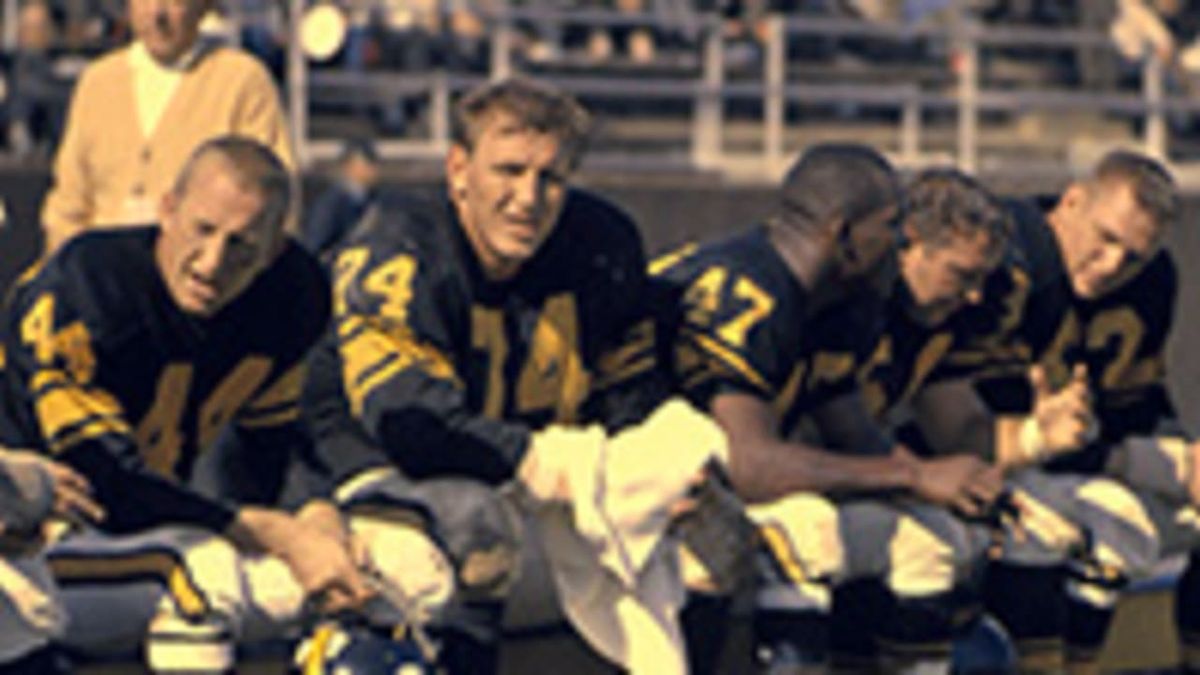
The modern Steelers are a monument to quality and consistency, with just three head coaches shepherding the franchise from 1969 to 2025. That wasn't always the case! Before you can get to the Steel Curtain of the 1970s, you have to cut through the Iron Loose Collection of Cloth of the 1960s.
The entire history of Pittsburgh football before Chuck Noll's era is, at best, uninspiring. There are enough .500-caliber seasons to prevent the entire 35-year history from melting into one big vat of disappointment, but they're not exactly dripping in highlights. They made the playoffs just once, a one-and-done appearance in 1947.
Of course, it's not entirely fair to say Pittsburgh football was terrible. Johnny Unitas had been a Pittsburgh native, and the Steelers had drafted him in 1955 … and then cut him. Just like they cut Len Dawson, Jack Kemp, and a plethora of other players who went on to solid starting careers elsewhere, not to mention ignoring players such as Babe Parilli and Joe Namath growing up in their own backyard. They did manage to trade for Bobby Layne and had some success in the late 1950s and early 1960s. The Steelers website still lists Layne leading the team to a playoff appearance in 1962! What they don't mention was that this was the old Playoff Bowl, the matchup between conference runners-up, an epic battle for third place. Or, as Vince Lombardi once called it, a "a hinky-dink football game, held in a hinky-dink town, played by hinky-dink players" and "the Shit Bowl … a losers bowl for losers." The Steelers lost that game, by the by.
But before long, they'd be longing to even reach the heights of hinky-dink. Layne retired after 1962, Hall of Fame lineman Ernie Stautner retired after 1963, and head coach Buddy Parker retired after 1964. Losing the three leaders of your team in back-to-back-to-back years is never ideal, but losing Parker may have been the biggest blow. Layne and Stautner were at the end of their careers, but Parker? He had been a great coach in Detroit and had brought Pittsburgh to the brink of success, just a game outside of championship contention. He returned in 1965, saying the Steelers were on the brink of contention. They then lost their first four preseason games and he resigned, telling Art Rooney "I can't win with this bunch of stiffs." Ouch.
Turns out, Mike Nixon couldn't win with that bunch of stiffs either. With the core of the decent Parker teams aging beyond usefulness and no young talent to replace them, the 1965 Steelers went 2-12 with an estimated DVOA of -41.8%. They had a -30 turnover margin, which remains the worst in NFL history despite playing in a 14-game season. Bill Nelsen threw 17 interceptions, second-most in the league, but he really couldn't be replaced. Backup Tommy Wade had 13 interceptions on just 66 pass attempts, and third-stringer Ed Brown had five more on just 18 attempts; both players hold the post-1950 record for interception percentage with at least their number of attempts.
The defense improved after 1965, keeping the Steelers' total DVOA down around -15.0% for the rest of the pre-Noll era, but the offense continued to flounder on the shoals. Nelsen actually was a pretty solid passer when he was playing, but he suffered knee injuries in 1965, 1966, and 1967 before being traded in 1968. The story of the Steelers of this time period is a solid defensive line just being let down by everyone around them. There are a couple of Steel Curtain players here—Andy Russell rejoined the team in 1966 after military service, and Mean Joe Greene came in the 1969 draft and immediately became defensive rookie of the year and a force to be reckoned with—but most of the team was just dismal.
That 1969 draft was the first overseen by Chuck Noll; Greene was the first player he added to the Steelers. Noll went 1-13 in his first year as head coach, but won the most important contest of the season—the coin toss with Chicago which meant Pittsburgh got the first pick, allowing him to draft Terry Bradshaw first overall, and Mel Blount later. Jack Ham came in 1971. Franco Harris in 1972. It took a few years for Noll to replenish the depleted roster, but the dude could draft, and the rest is history.