Anti-Dynasty #52: 1921-30 Minneapolis Marines/Red Jackets
Minnesota didn't get an NFL team to stick until the Vikings, but they had participants in the 1920s! Just, uh, not very good ones.

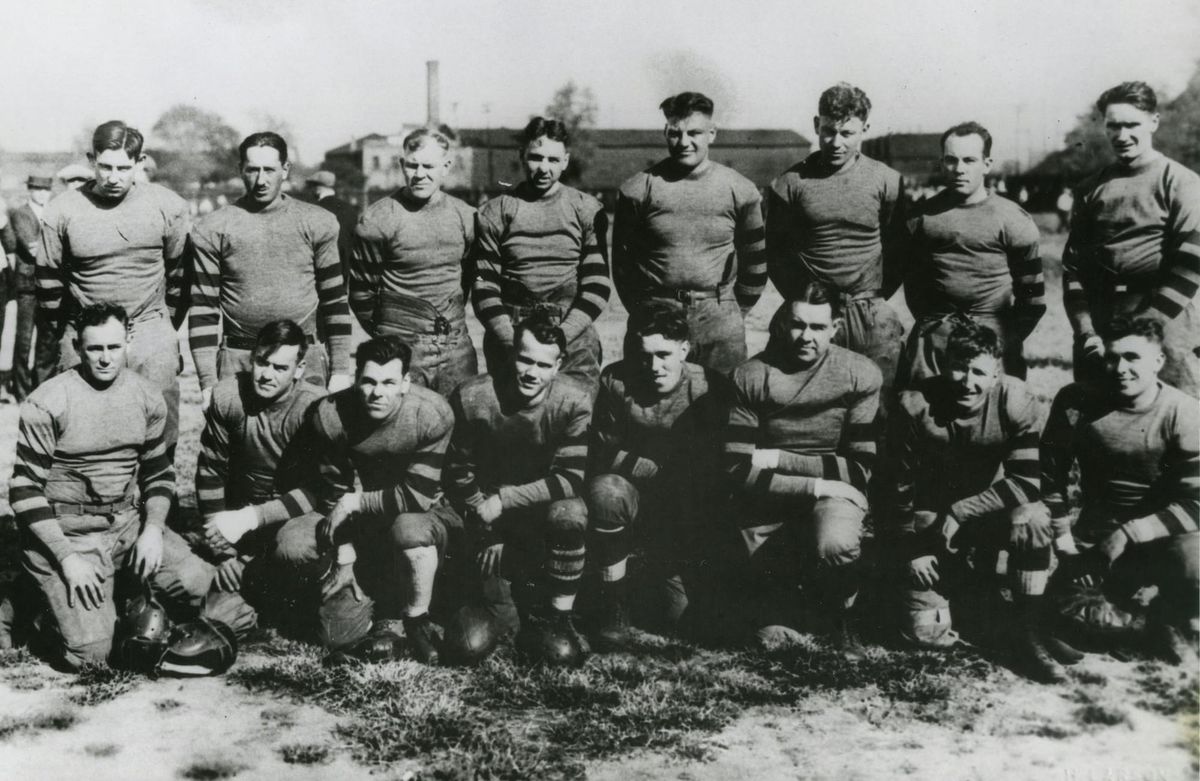
Peak Anti-Dynasty Points: 44
Record: 6-33-3 (.179)
Average DVOA: -14.6%
Bottom-Five DVOA: -18.3%
One last-place finish in the NFL
Head Coaches: Rube Ursella, Russell Tollefson, Harry Mehre, Joe Brandy, Herb Joesting, George Gibson
Key Players: FB Herb Joesting, WB Ainer Cleve, BB Mally Nydall, E Oscar Christianson, G George Kramer
Z-Score: -5.34
The Marines played in the NFL from 1921 to 1924, the Red Jackets in 1929 and 1930. They're connected by both being owned by John Dunn and Val Ness, so they're considered one franchise by the NFL, but there's almost no on-field continuity between the Marines and Red Jackets; only Rube Ursella played a game for both squads. In a sense, then, this is a Frankenentry, pieced together from two teams that, while bad, would not have qualified for the main table. The Marines didn't play enough games to qualify; the Red Jackets didn't exist for long enough. There's still interesting history here, but this feels very much like the least deserving team on the list.
As with most of the other old-timey teams we have looked at, the path to becoming a terrible 1920s football team was to be a great 1910s football team. The Marines were particularly interesting, as they had basically the same lineup for a decade straight. They started as a collection of working-class teenagers from the Cedar-Riverside neighborhood of Minneapolis, playing sandlot games in the 115-pound weight class—no high school or college experience, certainly no pay. By 1907, their corps was in place, led by Ursella, a do-it-all star on offense, defense, and especially in the kicking game as a feared drop-kicker. By 1910, they were competing in the unlimited weight class, where they had a ferocious, five-year-long battle with the cross-town Minneapolis Beavers over the city championship.
The Beavers, in contrast, mostly had ex-college players from the University of St. Thomas, and how there is not a movie about a rag-tag group of working-class kids battling with the university kids from across the tracks for the city title is beyond me. It even has the much-needed second-act twist: after losing to the Beavers in back-to-back years, the Marines brought in an outside coach to teach them the single-wing formation and cemented them as the best amateur team in the state. Hollywood, get on this.
After beating the Beavers badly enough they had to fold, the Marines basically stomped all over all comers, going 21-1-1 over the back half of the 1910s. The only thing that could stop them? A global pandemic, as the combination of the Spanish Flu and World War I wiped out the 1918 season. By the time football could resume, the Rock Island Independents had swooped in and stolen Ursella and the core of the team; they went on to claim the 1919 national championship while the Marines plummeted. Joining the NFL in 1921 was an act of desperation, hoping that moving to the pros would generate more fan interest and more money. Instead, the Marines just got beat by larger amounts, and attendance plummeted. An 0-6 season in 1924 caused Dunn to fold the team, and the 1929 revival wasn't much better, despite the return of the then-39-year-old Ursella as an attraction. The team's players were sold to the Frankford Yellow Jackets, and Minnesota would have to wait until the 1960s to have another football team.