Anti-Dynasty #17: 1989-95 New England Patriots
Bankruptcies, sexual harassment, and the Jacksons -- what more could you ask for?

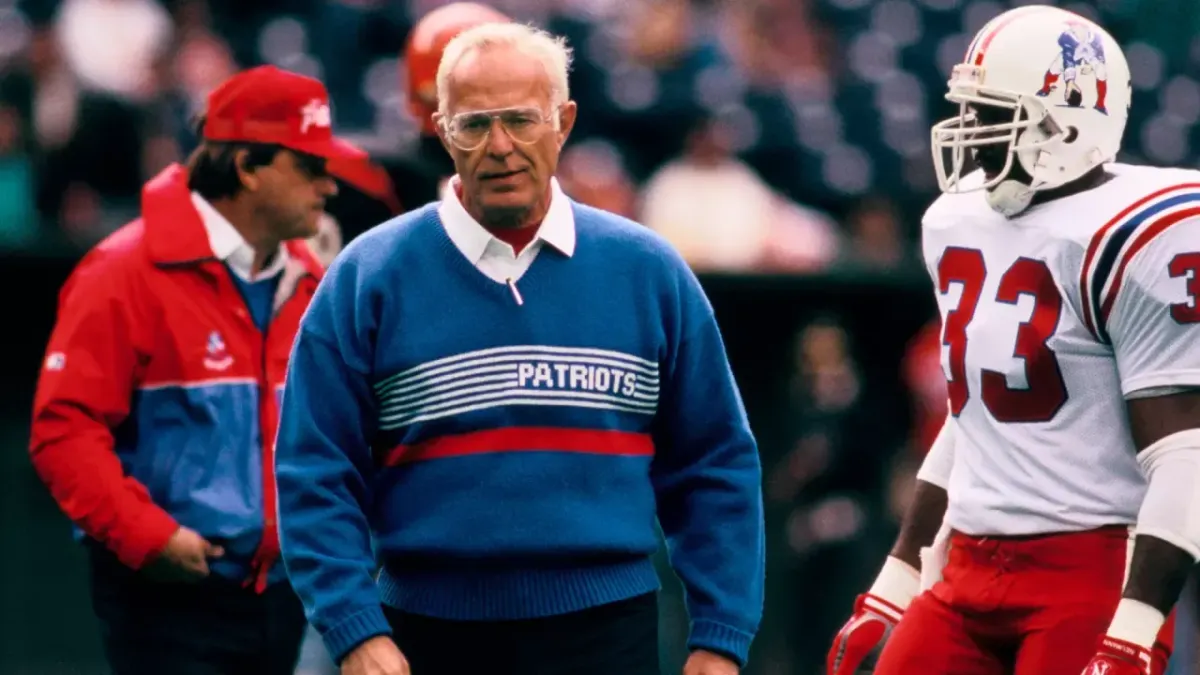
Peak Anti-Dynasty Points: 42
Record: 35-77 (.313)
Average DVOA: -25.1%
Bottom-Five DVOA: -32.1%
Two last-place finishes in the NFL
Head Coaches: Raymond Berry, Rod Rust, Dick MacPherson, Bill Parcells
Key Players: QB Drew Bledsoe, WR Irving Fryar, TE Ben Coates, TE Marv Cook, T Bruce Armstrong, DE Brent Williams, NT Tim Goad, LB Vincent Brown, CB Maurice Hurst
Z-Score: 3.52
Remember back in the 40s, where we talked about the Jim Haslett Saints? Well, add Bill Parcells' Patriots to the list of teams that don't belong in this series. In 1994, Parcells' second season, the Patriots went 10-6 and made the playoffs for the first time in nearly a decade. 1995 saw quarterback Drew Bledsoe take a temporary step back, but the same basic roster made Super Bowl XXXI the year afterwards. Subjectively, I would put a hard divider between the Berry/Rust/MacPherson Patriots and Parcells' squads; those five years' teams weren't fit to shine the boots of the Flying Elvii-clad mid-1990s clubs. Cut the line at 1993 and these Patriots would rise nearly to the top 10. They would be my subjective answer for team with the most concentrated torture, at least in the modern era. Combine the horrible on-field product, the off-field scandals, and the uncertain future of the franchise, and the early 1990s were a terrible time to be a Patriots fan.
Let's cover the on-field failures first. By the late 1980s, the core of the team that had been shuffled upon in Super Bowl XX was aging or retired, and young players weren't coming in to replace them. Things got off to a stirring start in 1989 when All-Pro Andre Tippett and regular starters Garin Veris and Ronnie Lippett were knocked out for the year—in the same preseason game. It turns out losing three starters at one time really sucks, with their defensive DVOA plummeting to 15.0%. Out went Raymond Berry, in came former defensive coordinator Rod Rust to set things straight.
The 1990 Patriots started out alright. They were 1-1! The long-simmering quarterback battle between Tony Eason, Steve Grogan, and Doug Flutie had been solved by cutting Eason and letting Flutie run off to Canada. They hadn't lost an entire starting lineup in preseason. Things were looking good. And then all hell broke loose off the field.
The day after their win, reporter Lisa Olson came forward and accused multiple Patriots players of sexually harassing her. New Patriots owner Victor Kiam responded in his typical classy way, calling her a "classic bitch" and saying that it was "asking for trouble" to send women into the locker room—his players could "wiggle their waggles in her face, as far as [he was] concerned." Great guy, that Victor Kiam. We'll come back to him in a moment.
The ensuing investigation and eventual massive fines weren't exactly great for team morale, and most outside the organization found a decent amount of schadenfreude in the Patriots dropping all of their remaining games, finishing 1-15. Rust shuffled between an injured Grogan, an utterly ineffective Marc Wilson, and an untested and unprepared Tom Hodson at quarterback, to no avail. The Patriots were outscored by 265 points, worst in the 1990s; their -42.5% DVOA was the second-worst of the decade behind next year’s Colts. They failed to take a lead at any point in 11 games, still the NFL record. And most of those losses came in embarrassing fashion—Washington jumped out to a 9-0 lead without running an offensive play thanks to a fumble returned for a touchdown and then a snap which sailed over Hodson's head for a safety. The team was uninterested and dispassionate on the field, an attitude which was reflected in their coach. Fired after the year, all Rust could say was "I think there are a whole lot of factors that made it a very unusual year." Thanks, Rod.
The team did not get better from there, with the 1992 2-14 season under Dick MacPhearson nearly as bad as the 1990 edition. But by that point in time, Patriots fans were more concerned about what was going on off the field.
Right, back to Kiam. The Patriots and Sullivan Stadium were owned, in a massive coincidence, by the Sullivan family. But they were close to being bankrupt by the end of the decade, thanks in part the flop of the 1984 Jacksons Victory Tour—the Sullivans had beaten the 49ers' DeBartolos in part because they were willing to offer more money, which included putting up their stadium as collateral for a loan to cover expenses. The tour was a disaster, the Sullivans were broke, and they were forced to sell. The team went to Kiam, while the stadium entered bankruptcy and was bought by Robert Kraft. With me so far? Alright.
It was Kiam's turn to face bankruptcy in 1992 thanks in part to his razor business hitting the pits (ha!), and he was forced to sell to St. Louis' James Orthwein. Orthwein had been trying to get a franchise to move to St. Louis ever since the Cardinals had left after 1987, and the Patriots were his opportunity—they would move and become the St. Louis Stallions after the 1993 season. They had a logo and ugly 1990s uniforms and a stadium and everything ready to go; the Patriots were gone! … except they were still in a long-term lease with the stadium, which Kraft still owned. Kraft refused to break the long-term lease and threatened a long and costly legal battle if Orthwein moved the team. Outmaneuvered, Orthwein had no choice but to sell the team to Kraft and keep the Patriots in business.
So, between 1993 and 1994, the Patriots got to stay in town (good!), replaced Orthwein with Kraft (an upgrade!), replaced Pat Patriot with the Flying Elvii (a massive downgrade!), and replaced MacPherson with Bill Parcells (a massive upgrade!). But can you imagine if the world had been slightly different—if Kraft had taken a buyout, and Tom Brady had led St. Louis to multiple Super Bowl titles? Or if the Sullivans hadn't outbid the DeBartolos for the Jacksons tour, and the 49ers were the ones shipped out to the Midwest, with a St. Louis-Green Bay rivalry developing in the late 1990s? Of all the never-were teams—the Baltimore Bombers, the Memphis Hound Dogs, and so on—the St. Louis Stallions might produce the most interesting What Ifs.