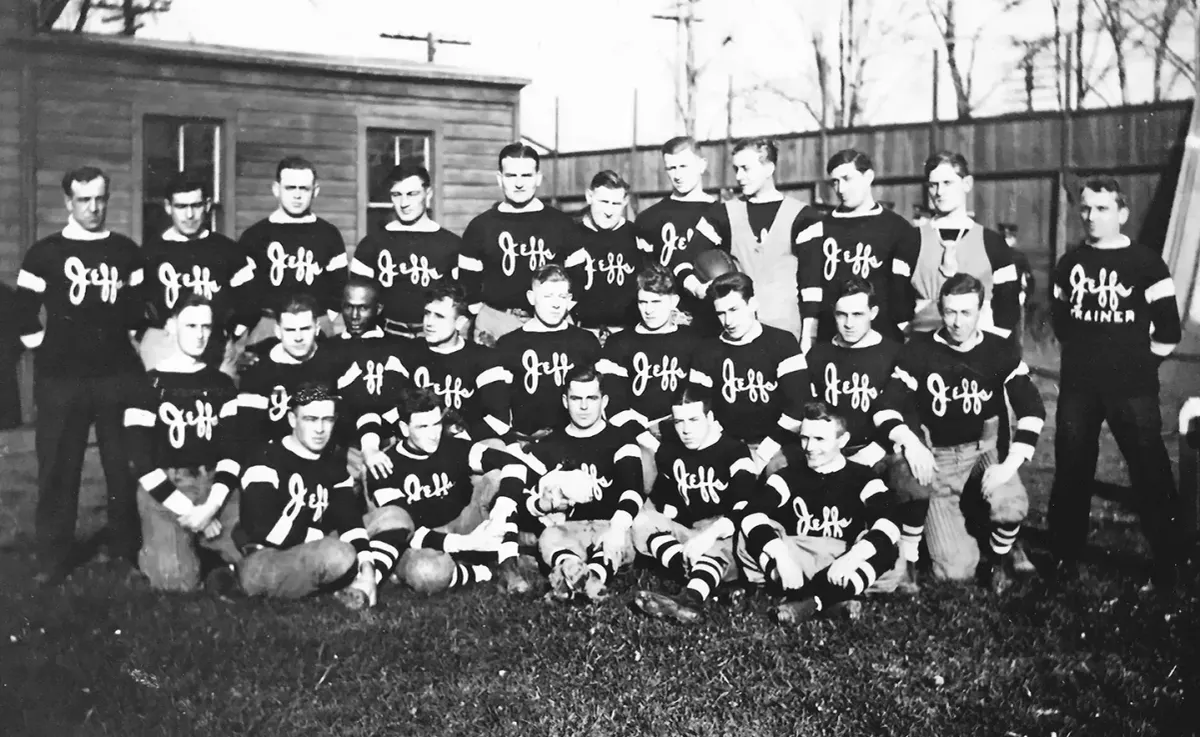
Anti-Dynasty #38: 1921-25 Rochester Jeffersons
The worst team of the 1920s -- or, at least, the worst one that lasted more than a season or two.

Peak Anti-Dynasty Points: 35
Record: 2-24-2 (.107)
Average DVOA: -33.0%
Bottom-Five DVOA: -33.6%
Four last-place finishes in the AFPA/NFL
Head Coaches: Jack Forsyth, Doc Alexander, Leo Lyons, Johnny Murphy, Tex Grigg
Key Players: WB Bob Argus, BB Shag Sheard, E Spin Roy, G Darby Lowery, C Hank Smith
Z-Score: -2.65
And we've arrived at the last team from the 1920s. Two wins in five seasons, zero in their last four. The Jeffs are the entire reason why teams with fewer than 10 games played in a season have their DVOAs truncated; otherwise, the Jeffersons would be listed as the third-worst anti-dynasty of all time. Averaging a -33.0% DVOA, a mark just 48 teams in the actual DVOA era have ever reached, will do that for you.
How bad can a team be? Only one team has ever dipped approached -50.0% in actual DVOA—the 2005 49ers, and we'll get to meet them later on in these pieces. But in short spurts, teams can put up much worse numbers than that. The worst single-game mark in 2025, for instance, was the Browns’ 31-3 loss to the Bears, which gave them a DVOA of -131.9%. Small sample sizes can produce spectacular results.
With that in mind, let's meet the 1923 Rochester Jeffersons. The Jeffs opened their season on the road at Normal Park in Chicago, where they put up a valiant effort against the Cardinals, losing 60-0. Things got a little better the next week, as their trip to the Rock Island Independents saw them battle their opponents to a 56-0 loss. To put those numbers into context, the average team scored 7.9 points a game in 1923; allowing 60 back then is somewhat like allowing 188 today. The Jeffs then enjoyed their six-week break from NFL action, mostly playing sandlot teams, and that helped them get into shape for 12-6 and 13-0 losses to the Toledo Maroons and their cross-state rival Buffalo All-Americans. And that ended their season, going 0-4 against four average opponents (estimated DVOAs ranging from -12.5% to 9.8%) and being outscored by 34 points a game.
The end result? An estimated DVOA of -91.6%, which is worse than any real four-game stretch I could find in our database. They followed that up with a -57.2% DVOA going 0-7 in 1924, again worse than any seven-game stretch I could find. In an earlier entry, I stressed that the Dayton Triangles were not as bad as their record indicated. The Jeffersons most definitely were. They had 23 straight games without a victory, a record only beaten by the 1976-1977 Buccaneers. Their only wins in this stretch came against the 1921 Columbus Panhandles, who we already saw on this list, and the 1921 Tonawanda Kardex in their one and only game in the NFL. This is the worst team of the 1920s, at least among those that managed to survive more than a handful of games.
And it's sad that that's the case, because owner/general manager/promoter/doctor/photographer/financier Leo Lyons is a really interesting and important historical figure in the NFL. His histories of the league and its predecessors are the gold standard of this era. He helped found the Hall of Fame, and in fact much of the Hall's early exhibits and collection consists of stuff that Lyons had accumulated over the years. He has been nominated several times for the Hall, but never been inducted. And before his Jeffersons were too bad, they were too good.
The Jeffersons were semi-pro and sandlot stars in the teens, and the Rochester fans loved their sandlot football. Lyons gambled that they'd love to see one of their local teams join the pro leagues as well, but that turned out not to be the case. Fans in Rochester didn't want to see the best players from around the country wearing a shirt that said Rochester on it; they wanted to see local Rochester people playing each other. The more players Lyons brought in, the less fans cared. And the Jeffersons were good enough that they would routinely blow out local teams, but poor enough that they'd get blown out by pros. That's a bad spot to be in—if none of your games are competitive, people aren't going to show up. Lyons put every penny he had into the team, even mortgaging his house to try to keep it afloat, explaining why they managed to last long enough to appear on this list. In the end, though, if you don't win any games for four years, you're not going to be able to keep a team alive, and the Jeffs folded after the 1925 season.